Growing a pineapple from its top might sound like a fun science project, but it’s much more than that — it’s a rewarding gardening experience that brings a taste of the tropics right into your home. Inspired by the video “How to Grow a Pineapple from its Top! Works Every Time! Pineapple (Smooth Cayenne)”, this guide will show you exactly how to turn a store-bought pineapple into a thriving, fruit-bearing plant.
With a bit of patience and care, you can enjoy the lush, tropical foliage of the Smooth Cayenne pineapple variety and eventually harvest your own sweet, homegrown pineapples. Let’s dive into the complete process — from selecting the right fruit to rooting, transplanting, and caring for your pineapple plant.
Understanding the Smooth Cayenne Pineapple
Before we start, it’s important to know what makes the Smooth Cayenne variety special. This is the most popular pineapple grown commercially around the world. It’s known for:
- Golden-yellow flesh with a perfect balance of sweetness and acidity.
- Smooth, spineless leaves, making it easier to handle.
- Medium to large fruits, typically 4–6 pounds each.
- High juice content, ideal for fresh eating or juicing.
Because Smooth Cayenne is adaptable and relatively easy to root, it’s one of the best varieties to start your home pineapple-growing journey.
1. Choosing the Perfect Pineapple Top
Your success begins with selecting a healthy pineapple. When you’re at the market, look for these qualities:
- Fresh, green leaves with no signs of yellowing or rot.
- A firm body with golden-yellow skin (not overly soft).
- No mold at the base of the crown.
Avoid fruits that are too ripe or have dried, brown leaf tips — those may not sprout well.
Once you’ve found the perfect one, it’s time to remove the top, also known as the crown, which will become your new pineapple plant.
2. Preparing the Pineapple Top
Step-by-Step Preparation:

- Twist or Cut the Top: Hold the pineapple firmly and twist off the leafy top. If it doesn’t twist easily, cut about an inch below the leaves.
- Remove Fruit Flesh: Carefully peel away any fruit remaining at the base of the crown. Leaving it can cause rot during rooting.
- Strip Lower Leaves: Pull off 5–8 rows of lower leaves to expose about an inch of the stem. You should see tiny root buds (brownish dots) — these will become roots.
- Dry the Crown: Place it in a dry, shady area for 2–3 days to allow the cut end to heal and form a callus. This step is crucial to prevent rotting once you start rooting.
3. Rooting the Pineapple Top in Water
Rooting in water is one of the easiest and most satisfying methods, especially for beginners.
Here’s how:
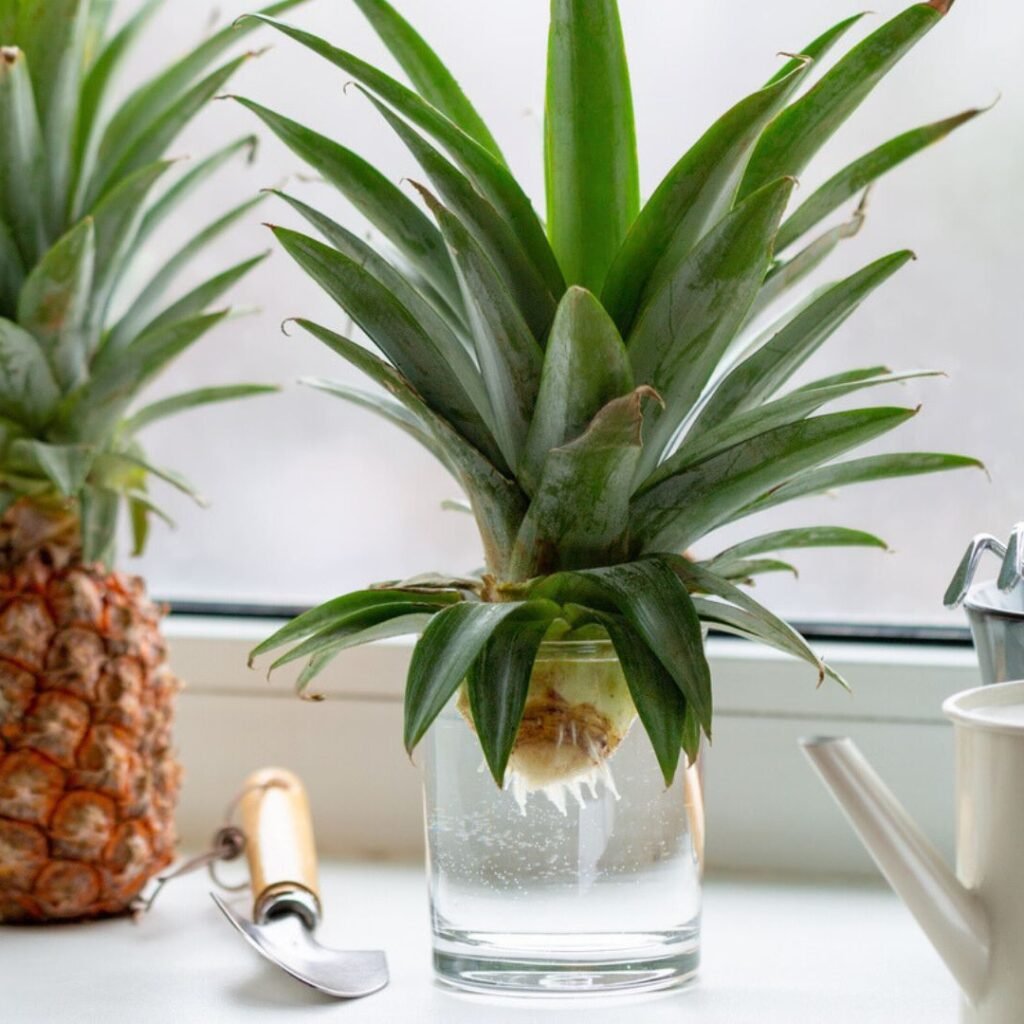
- Fill a glass jar or cup with water, just enough to cover the exposed stem (not the leaves).
- Use toothpicks or a narrow jar to suspend the crown so only the base is submerged.
- Place the jar in a warm, bright spot — indirect sunlight is ideal.
- Change the water every 2–3 days to keep it fresh.
In 2–4 weeks, you’ll see white roots emerging from the base. Once roots are around 2–3 inches long, your pineapple top is ready for planting.
(Tip: If you prefer, you can also root directly in soil, though water rooting makes it easier to monitor progress.)
4. Planting the Rooted Pineapple Top
Now that your pineapple top has a good root system, it’s time to transplant it into soil.
Container Requirements:
- Choose a pot at least 10–12 inches deep and wide.
- Ensure it has excellent drainage holes, as pineapples hate soggy roots.
Soil Mix:
Pineapples thrive in light, well-draining soil. A perfect mix would be:
- 40% potting soil
- 30% coarse sand or perlite
- 30% compost or coco peat
This mimics the sandy, tropical conditions pineapples love.

Planting Steps:
- Fill the pot with your soil mix, leaving space at the top.
- Plant the pineapple crown deep enough to cover the base of the leaves (about an inch into the soil).
- Firm the soil around the stem to keep the plant upright.
- Water lightly to moisten the soil — not soak it.
Place the pot in a warm, sunny location with at least 6–8 hours of bright light daily.
5. Caring for Your Pineapple Plant
Pineapples are tropical plants that love warmth, light, and humidity. With the right care, your Smooth Cayenne pineapple will flourish and eventually reward you with fruit.
Temperature:
Maintain a temperature range between 70–85°F (21–29°C). Avoid exposing the plant to temperatures below 55°F (13°C).
Light:
Pineapples thrive in full sunlight. If you’re growing indoors, place the pot near a sunny window or under grow lights.
Watering:
Water deeply but infrequently. The soil should dry out slightly between watering sessions. Overwatering is a common mistake — always check that the top inch of soil is dry before watering again.
In hot weather, lightly mist the leaves to increase humidity. Pineapples also absorb some moisture through their leaves.
Fertilizing:
Feed your plant every 2–3 weeks during the growing season with a balanced liquid fertilizer (10-10-10) or organic compost tea.

Once the plant matures, switch to a phosphorus-rich fertilizer to encourage flowering and fruiting.
6. Transplanting Outdoors (Optional)
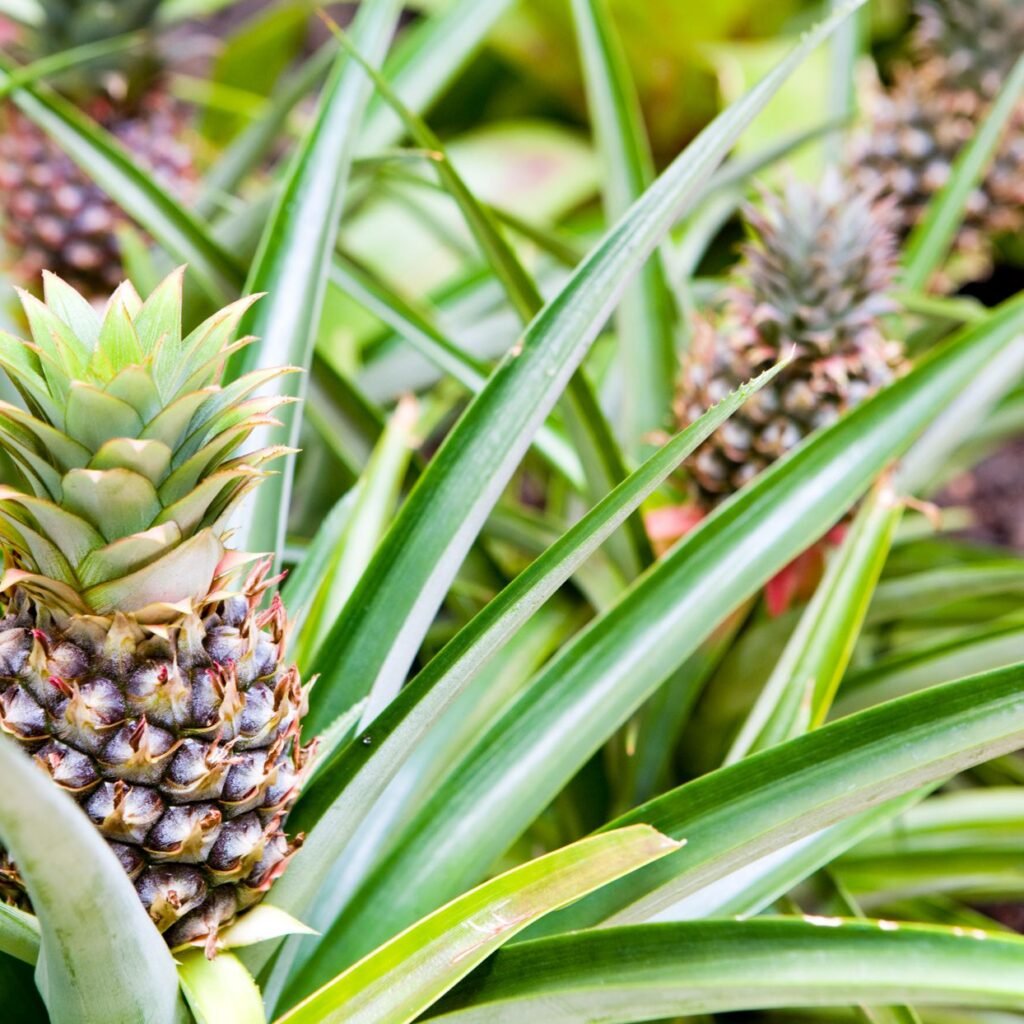
If you live in a warm climate (USDA Zones 10–12 or tropical areas), you can move your pineapple outdoors once it’s well-established.
Transplant Tips:
- Choose a sunny, well-drained spot.
- Space plants 3–4 feet apart if planting multiple pineapples.
- Protect from strong winds, as the leaves can snap easily.
Outdoor pineapples often grow faster and larger than potted ones — but with care, both can yield beautiful fruit.
7. Patience: The Key to Growing Pineapples
One thing you must understand about pineapples — they take time. A Smooth Cayenne pineapple may take 18–24 months to produce fruit, depending on growing conditions.
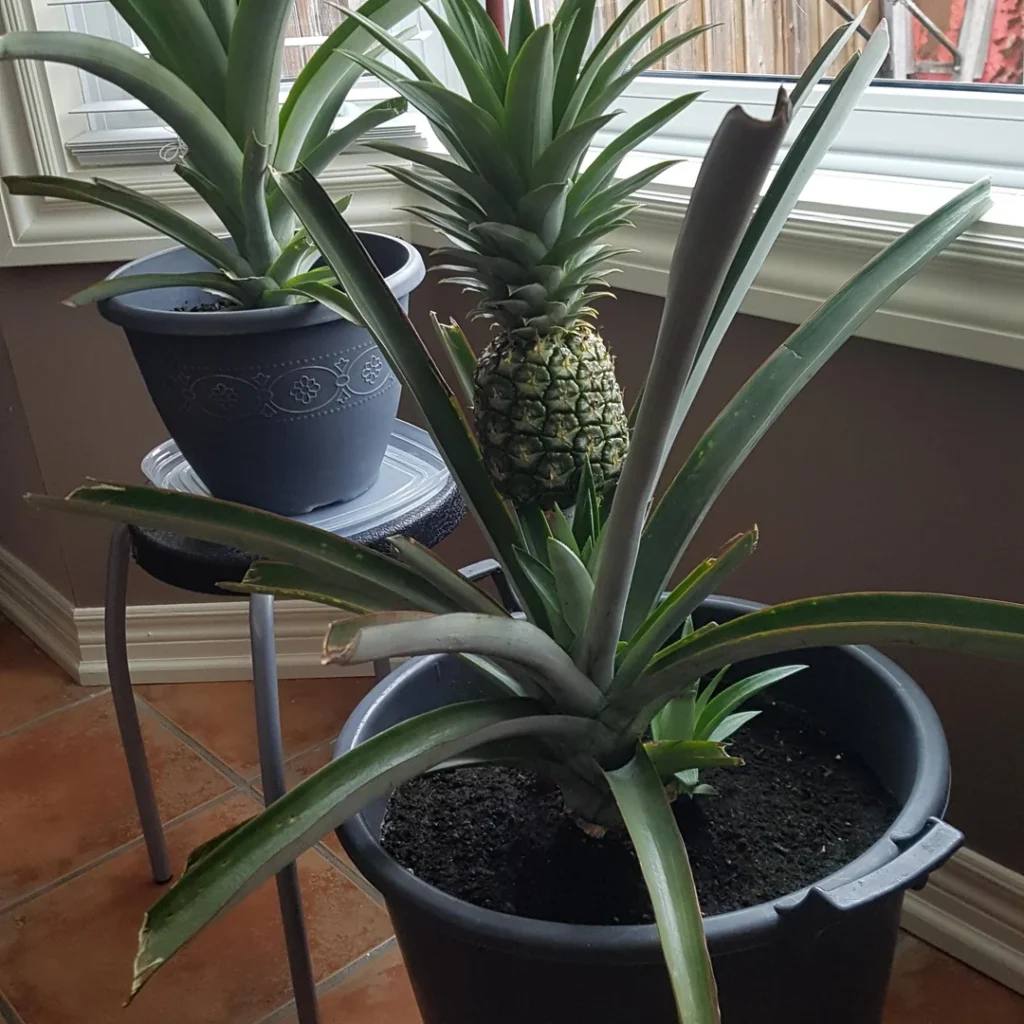
During this time, continue to provide sunlight, warmth, and moderate watering. The plant will produce a rosette of long, spiky leaves first, followed by a flower stalk once it’s mature.
8. Inducing Flowering (If It Takes Too Long)
If your pineapple hasn’t flowered after 18 months, you can encourage blooming naturally using a simple trick:
The Ethylene Method:

- Place the plant and a ripe apple inside a large, clear plastic bag.
- Seal the bag loosely and leave it for 7–10 days.
- The apple releases ethylene gas, which stimulates flowering in pineapples.
After 1–2 months, you should see a red or pink flower bud forming in the center of the plant. That’s the beginning of your fruit!
9. Fruit Development and Harvesting
Once your pineapple blooms, it takes about 5–7 months for the fruit to fully mature. During this stage, increase potassium levels in your fertilizer to improve fruit sweetness.
Signs of Ripeness:
- The outer skin changes from green to golden-yellow.
- The fruit emits a sweet fragrance.
- The lower eyes (small scales) flatten out slightly.
Use a sharp knife to cut the fruit close to the base. Handle carefully — freshly harvested pineapples bruise easily.
After harvesting, the mother plant will produce suckers or side shoots near the base. These can be separated and replanted, allowing you to grow even more pineapples without starting from scratch.
10. Common Problems and Solutions
Yellowing Leaves:
Often due to overwatering or poor drainage. Let soil dry out and ensure pot has holes.
No Root Growth:
Crown may have rotted. Always dry the crown before planting.
Slow Growth:
Usually from insufficient sunlight or low temperatures. Move plant to a sunnier, warmer location.

Pests:
Watch for mealybugs or scale insects. Use neem oil spray weekly to keep them away.
11. Enjoying Your Homegrown Pineapple
There’s nothing quite like cutting into a pineapple you grew yourself. The aroma, the sweetness, and the satisfaction of nurturing it from a simple crown are unmatched.
Homegrown Smooth Cayenne pineapples are juicier and fresher than store-bought ones — perfect for smoothies, fruit salads, or simply enjoyed fresh.
Even after harvest, the plant keeps giving. The offsets or “pups” it produces can be replanted, giving you a continuous supply of pineapples year after year.
Final Thoughts
Growing a pineapple from its top truly works every time when done right. It’s a wonderful example of nature’s ability to regenerate — transforming kitchen scraps into living, fruit-bearing plants.
With the Smooth Cayenne pineapple, you not only enjoy a tropical plant that brightens your space but also gain the thrill of harvesting your own sweet, golden fruit. Whether you grow it on your balcony, terrace, or garden, this simple propagation method connects you to the joy of sustainable gardening — one pineapple at a time.

Leave A Comment