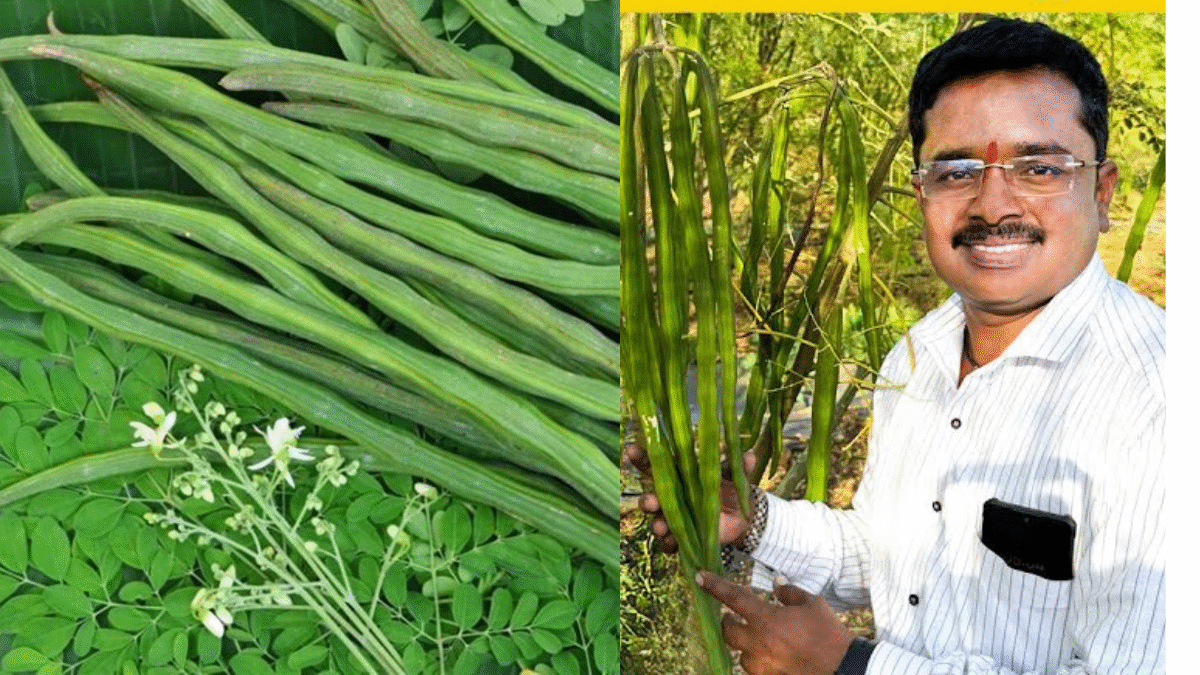
In Maharashtra, in a small village of Pune district, lives a farmer who has quietly rewritten the rules of profitable farming. Mr. Rajesh Thaker (Bai Raje Thaker) is not a celebrity farmer, nor did he inherit a ready-made success model. What he has is seven years of hands-on experience, countless trials, and deep practical knowledge of moringa cultivation.
Starting in 2018, when very few farmers believed in moringa, Rajesh decided to experiment with this “unpopular” crop. Today, he grows moringa on 8 acres, after refining every detail—from plant spacing and pruning to irrigation and market timing. Farmers visiting his field often hear him say:
“If moringa farming is done correctly, it is like a golden egg–laying hen. If done blindly, it feels like a loss.”
His journey is proof that knowledge-based farming, not hype, creates long-term success.
Why Moringa Is Considered Risky by Many Farmers
Moringa (also known as drumstick or sahjan) is often misunderstood. Many farmers complain about losses because:
- They start without understanding pruning techniques
- They ignore spacing and sunlight management
- They do not study local market demand
- They rely only on online profit claims
Unlike crops such as onion or sugarcane, moringa demands active management and timely decisions. According to Rajesh:

“Moringa fails not because it has no market, but because farmers don’t manage flowering and pruning properly.”
One-Time Planting, 10 Years of Continuous Harvest
One of the biggest strengths of moringa farming is its long production cycle.
- First harvest begins 6 months after sowing
- Harvest continues for 2–3 months
- Plants are then pruned
- New flowering starts after 3 months
- Pods are ready 1.5 months after flowering
This cycle allows farmers to take two harvests every year, and the same plants can remain productive for up to 10 years.
Ideal Climate and Soil Conditions
Moringa thrives in warm climates.
Best conditions include:
- Temperature range: 25°C to 40°C
- Moderate rainfall
- Well-drained soil
- Avoid highly chemical-treated riverbank soils
Regions where crops like soybean, jowar, or millets grow well are usually suitable for moringa cultivation.

Correct Spacing for High Yield
Rajesh follows a scientific spacing pattern:
- 12–14 feet row-to-row
- 6–7 feet plant-to-plant
- Around 600 plants per acre
He prefers zig-zag planting, which ensures that each plant receives enough sunlight and airflow, reducing disease risk and improving pod size.
Intercropping: Earning While Trees Grow
During the first year, moringa plants leave a lot of empty space. Rajesh utilizes this through short-duration intercropping, such as:
- Onion
- Tinda (apple gourd)
- Soybean
- Tomato or bitter gourd (short-term)
Long-duration crops like ginger, cotton, or pigeon pea are avoided because they compete for nutrients and water.
Fertilizer and Water Management: Less Is More
Moringa does not require heavy fertilizer application.
Basic nutrition plan:

- First month: Humic acid + NPK 19:19:19 (small dose)
- After 3 months: 1–2 tractor loads of farmyard manure per acre
- Before flowering: 12:61:00 or 12:12:32
- Flower retention: Amino acid or fulvic acid spray if needed
Watering tips:
- Light but regular irrigation
- Avoid waterlogging
- Drip or rain pipe irrigation works best
Pruning: The Key to High Production
Pruning is the most critical operation in moringa farming.
- First pinching at 2.5–3 feet height
- Remove lower branches
- Strengthens the main stem
- Encourages multiple flowering branches
After every harvest, pruning is repeated to restart the production cycle.
Harvesting and Market Strategy
Ideal harvesting stage:
- Light green pods
- Soft texture
- Around 2 feet long
Market prices:
- April–May: Lower demand
- Most of the year: ₹50–₹180/kg
- Peak season: ₹300+/kg
Timing the harvest according to market demand is essential for higher profits.

Income Potential Per Acre (Based on Real Data)
Year 1 (first 8 months):
- Yield: ~5,000 kg
- Avg. price: ₹50/kg
- Income: ₹5,00,000
Year 2:
- Yield: ~8,000 kg
- Avg. price: ₹80/kg
- Income: ₹6,50,000
Year 3:
- Yield: ~13,750 kg
- Avg. price: ₹100/kg
- Income: ₹13,75,000
Estimated first-year cost: ₹15,000–₹20,000 per acre
Value Addition and Future Scope
Rajesh is now exploring processing and value addition, including:
- Moringa leaf powder
- Tablets and capsules
- Pickles
- Export-grade dried leaves
With rising global demand for superfoods, moringa has strong export potential.
Advice for New Farmers
Rajesh’s golden advice:
- Start small—plant 4–5 trees first
- Observe results on your own land
- Learn market behavior
- Scale up gradually
“Don’t jump into farming by seeing numbers. Learn first, then invest.”
Final Thoughts
Moringa farming is not a shortcut to success—it is a knowledge-driven, long-term investment. Farmers like Rajesh Thaker prove that with correct techniques, moringa can provide stable income for 10 years or more from a single plantation.


Leave A Comment